


Overhead Crane Systems
Engineering and manufacturing of single- and double-girder overhead crane systems around project capacity, span, lifting height, duty class, building geometry and operating conditions.
What defines an overhead crane system?
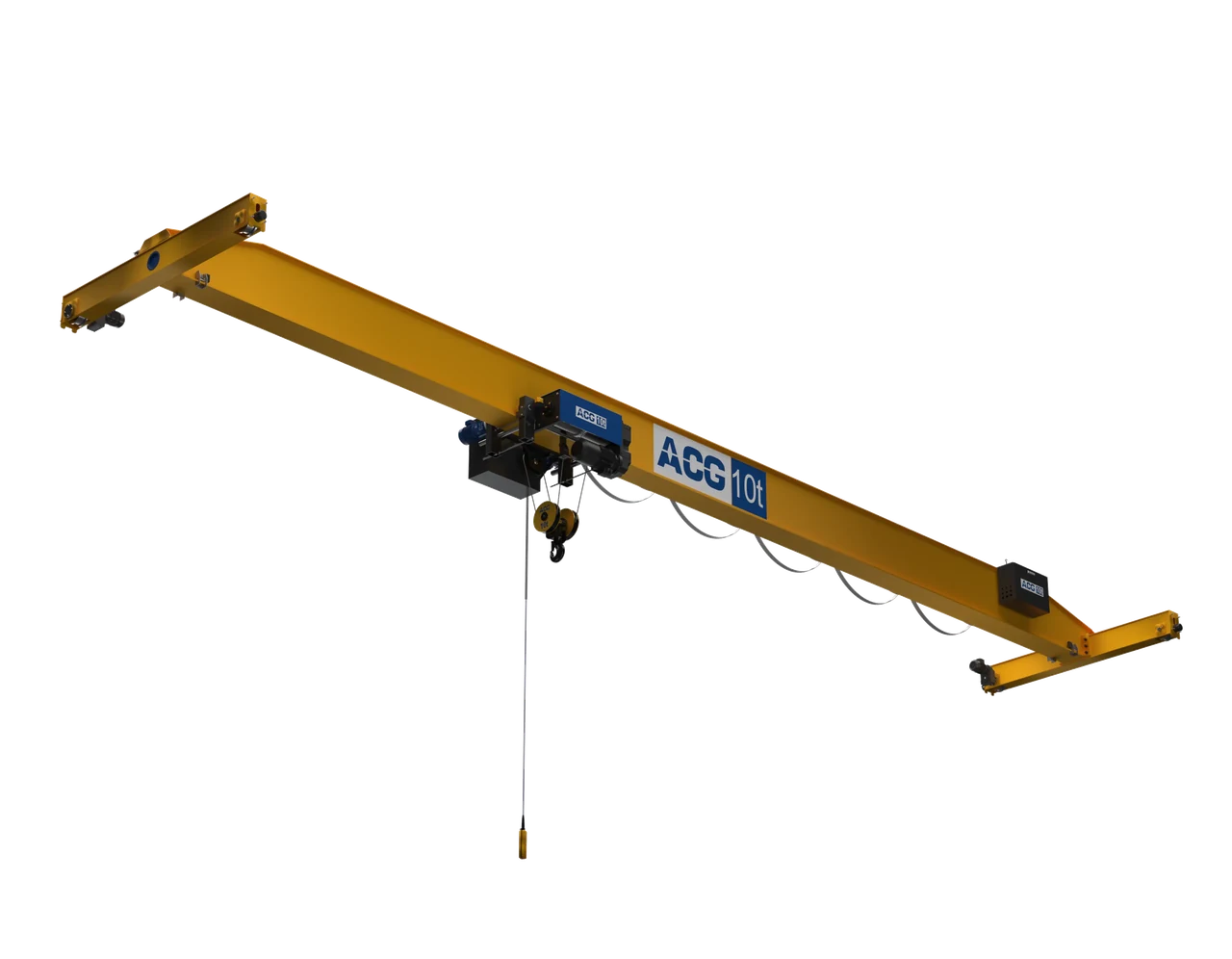
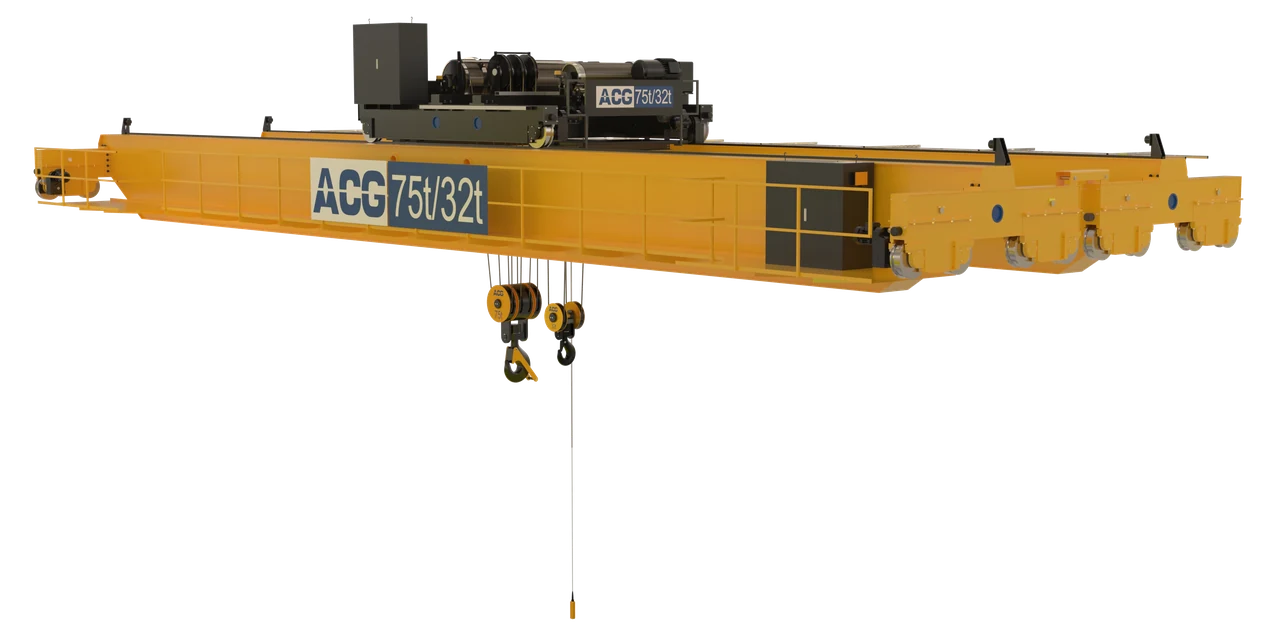
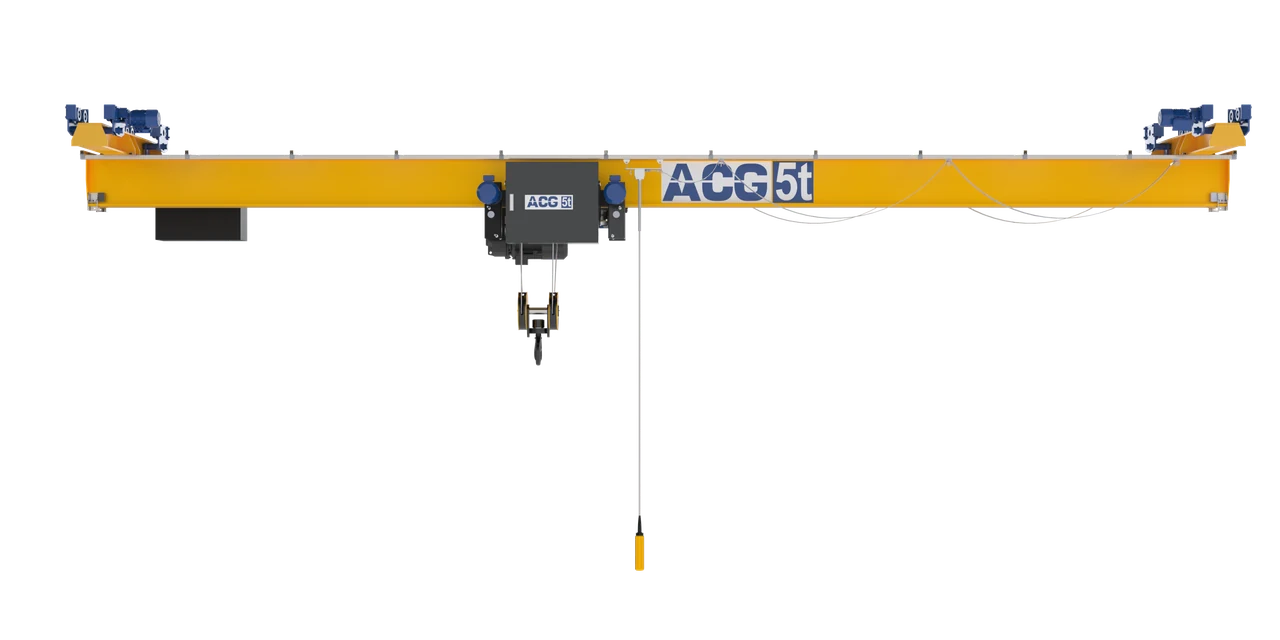
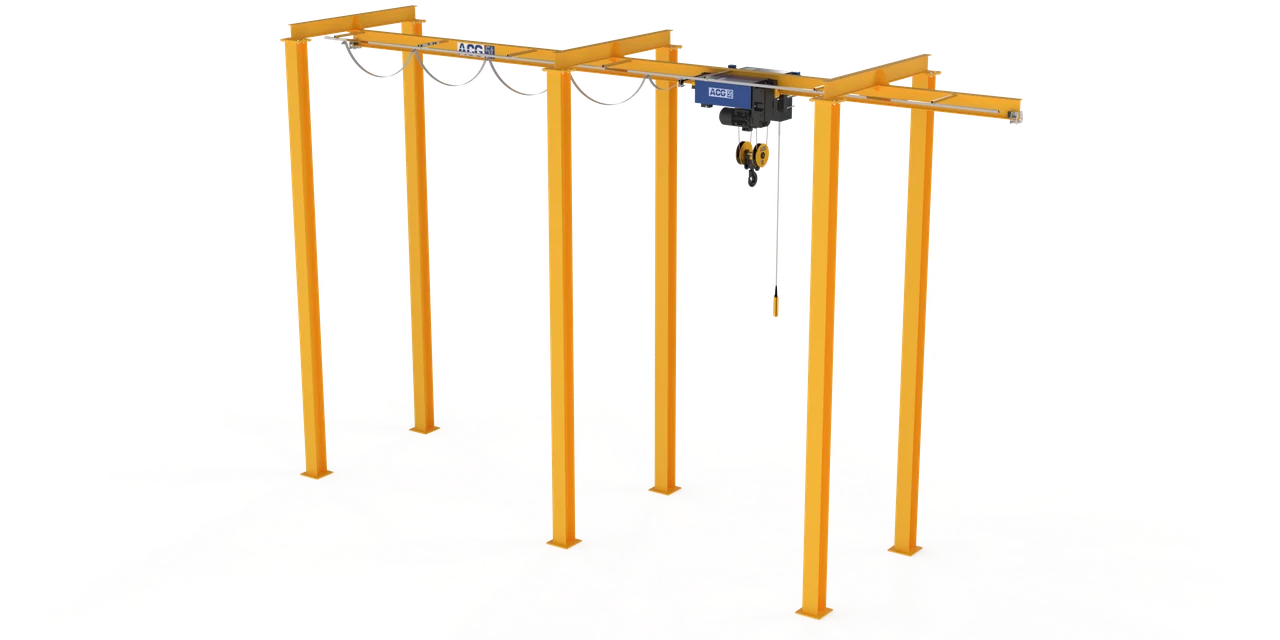
An overhead crane integrates bridge structure, end carriages, hoisting equipment, electrification, controls and safety systems to move loads across a defined building or process area.
Single girder and double girder configurations
Crane configuration is selected according to capacity, span, hook approach, lifting height, duty, building constraints and maintenance requirements.


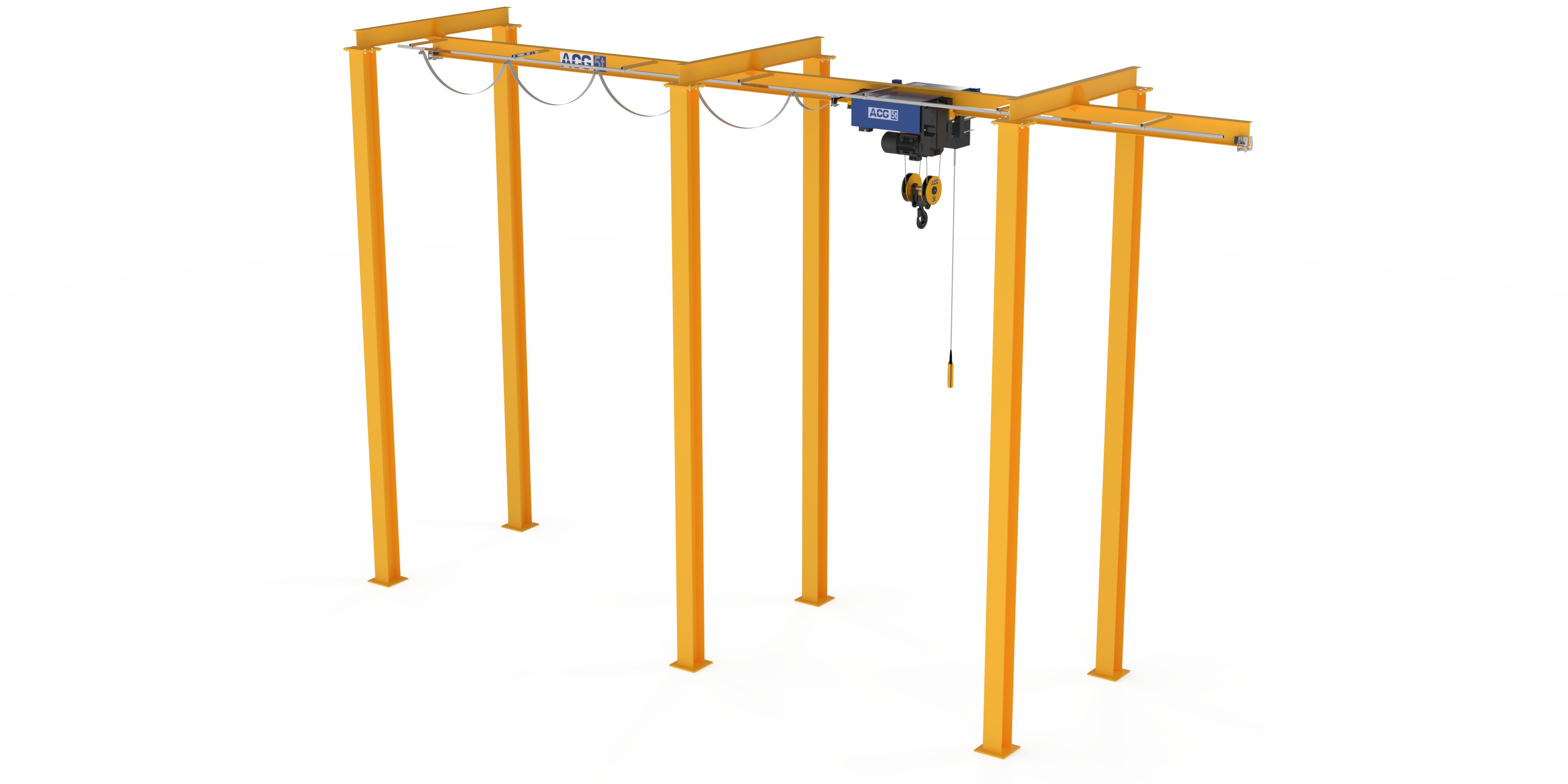
Compare configurations against project needs
Single- and double-girder systems should be compared by required performance and geometry rather than by a single parameter such as capacity.
Define the RFQ with the correct technical parameters
Capacity, span, lifting height, duty class, travel length, speeds, power supply, environment and building details create the basis for engineering review.
Request Engineering & QuotationA complete crane is a coordinated system
Bridge girders, end carriages, hoists, trolleys, wheels, motors, brakes, electrical panels, power supply and controls must operate as one engineered system.
Duty classification shapes equipment selection
Operating frequency, load spectrum, mechanism use and project requirements influence duty classification and component selection.
Engineer around the building and process
Runway geometry, available headroom, clearances, hook coverage, structural interfaces and maintenance access must be coordinated with the crane design.
Price depends on configuration and duty
Capacity alone does not determine project cost. Span, lift, duty, speeds, control architecture, environment, accessories and installation scope also matter.
From requirement review to commissioning
A structured project path connects technical inputs, engineering, manufacturing, quality control, testing, installation and handover.
Overhead cranes across industrial environments
Applications include production, maintenance, steel, cement, mining, energy, manufacturing, warehouses and heavy industrial processes.
Design for operation, service and future support
Maintainability, spare-part strategy, inspection access and service planning influence long-term crane value beyond initial procurement.
Overhead crane terminology & engineering knowledge
Connect product selection with technical terms, duty concepts, components, inspection topics and engineering references.
Overhead crane questions
The correct crane configuration depends on the application, building, duty and project specification. ACG engineering can review the required parameters before quotation.
Specify your overhead crane with ACG
Send the available capacity, span, lift, duty and site information for an initial engineering and quotation review.
Request Engineering & Quotation